Photo Manipulation

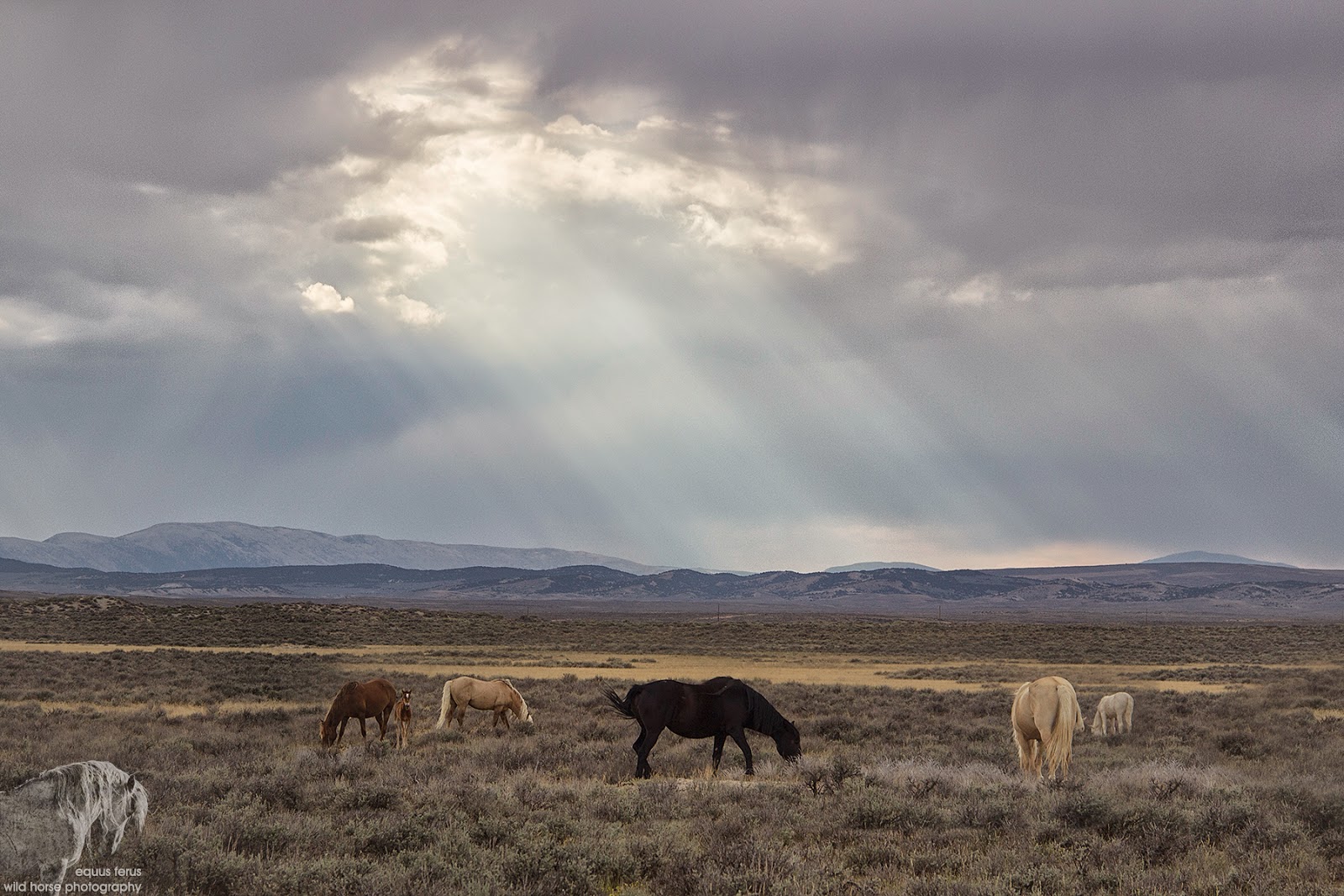
Unaltered photograph. The brilliant sky was a results of a fire just outside of Sand Wash Basin.

I had a lot of time sitting beside my husband’s hospital bed after his surgery; a rare moment to surf the Internet and take a look at other wild horse photographers. I found some really outstanding photographs and some that appeared to defy the laws of nature and physics. I’m referring to the trick of “Sky Replacement”. It occurs when a photo subject, in this case horses, is wonderful, but the sky is kinda ‘blah’. So the photographer simply inserts a background that makes the subject really stand out against a panoramic sunset worthy of a Western Hollywood finale…

Unaltered photograph

There’s nothing wrong with enhancing photographs. I do it every day. Tweaking the focus, bumping the saturation up just a little, or cropping a photograph for maximum impact. Even replacing the sky is fine… except when you are entering the doctored photograph in a photo contest, or selling wild horse tours. In those instances, it’s underhanded, especially the wild horse tours. People look at the photos taken on wild horse tours to decide if they want to pay this individual to show them around a wild horse management area. If that tour guide is displaying significantly altered photos to make the tours look better, that’s simply wrong.

Unaltered photograph. Most photos taken in low light (no flash) tend to be a bit out of focus.

As for photography contests, it depend upon the rules and regulations of the contest. Personally, I would never enter a photo contest with a photo I manipulated heavily as I consider it unethical. The vast majority of contests do not allow significant manipulation; some even ask for the RAW original photograph. However, many contests have categories for photo manipulation which are usually more abstract, and not normally landscapes. Some photographers combine photos and some make mosaics for gorgeous outcomes; these are clearly altered, and not being presented as actual photographs. (Raw refers to the photograph file that came directly from the camera and was not altered in any way).

Unaltered photograph

There is a reason photographers such as myself, get up before dawn, or stay until dark to capture the horses against a dramatic sky. Sometimes we get the perfect shot, and sometimes Mother Nature decides it should be overcast. Nevertheless, when we nail the sunrise, or the sunset, we really earned it. Regarding replaced skies, in the words of Dr Ian Malcolm “… it didn’t require any discipline to attain it… You stood on the shoulders of geniuses to accomplish something as fast as you could,”. It literally takes three clicks of a mouse to replace a photographic sky. It takes weeks, days, hours of sitting and observing horses to capture photographs. Using a Sky Replacement in Adobe Photoshop, or a third-party sky replacement plug-in cheapens that dedication and effort.

Unaltered photograph

Art is a funny thing. The above statement is my opinion, and my opinion only. I would venture to say other photographers would agree that extensive photo manipulation is mendacious, especially if you’re using the photographs to sell something. Claiming “come on my wild horse tour and you’ll get photos like this (fake) photograph…” is just plain wrong. As for selling manipulated photos, I honestly don’t have a problem with that because the buyer makes the decision. I personally would not buy a photo that has been clearly altered to pass for ‘au naturel’, but that’s my choice. My goal as a photographer is to present the photographs as authentically as possible without artifice or manipulation. I want you to feel you’re standing next to me at the actual moment I take the photo and not what I can do in Photoshop months or even years later.

In conclusion, be discerning, especially when you are paying for something.


How to manipulate a photograph…

All the photographs are mine

It’s as easy as Edit=> Sky Replacement

EDIT
SKY REPLACEMENT
PICK YOUR SKY
ANOTHER SKY EXAMPLE

Presented below are the fakes and the original photograph beneath. They are easy to spot for the most part, usually the horizon line will give it away. There’s something odd about how the mountains meet the imposter sky- the distant mountains are out of focus, the sky looks hyper-focused, and there is a faint pale line at the horizon…

Additionally two strong light sources are another clue that they replaced the background. We cannot, as of yet, disobey the laws of physics. If the sun is behind the photographer in the photo, you cannot have a anther sunset in front of the photographer- it doesn’t work that way. We live on Earth, not Tatooine, and so we have only one sun.


The sun is shining on the horse’s face, yet the sun is also setting behind the horse… Be mindful of shadows, they usually point to the real sun’s location
The real sun os on the photographer’s right

The sun is shining from the photographer’s right side, and thus the second sun over the hills, is clearly faked
Corona and his band

The real sun is off to the photographer’s left (note the shadow on Cimarron’s tail), so it cannot be behind the hills as well
Cimarron

The real sun is off to the photographers left, so it cannot also be behind the hills. Also the horses would not be brightly lit if the real sun was behind them, they would be silhouetted/darker.

This photo manipulation is more plausible. The clouds are a little off, but otherwise this isn’t too terrible

This one is acceptable, and probably no one would know. The sky is appropriate, as are the shadows


This one is awful, note the horizon line

Another moderately acceptable photo. The sky is more indicative of later afternoon, but it passes

Note the odd horizon/mountains- there is often a fine light line where the mountains meet the fake sky

Pretty terrible

Two strong light sources, the real sun is off to the left

Note the pale line at the right side of the horizon. Not to mention the real sun is behind the photographer- off to the right

Things aren’t always what they seem… Enjoy!

Meredith
Equus ferus- Wild Horse Photography

How to be a Mustang Photographer (updated)

Photo credit Michael Cody Mack

1. A job– This may sound like a counterintuitive statement but unless you are wildly successful, you won’t make a living solely upon your mustang photos. Most of the successful photogs in the mustang industry also do non-mustang horse photography. Horse shows, gymkhanas, private photo shoots, animals other than horses (pet portraiture) etc.

I have a wonderful job I adore outside of photography that allows me to pay for camera equipment, software, advertising, traveling to the horse management areas, printing… Plus my job also gives health benefits so when I cut my leg open on rusty barbed wire in pursuit of mustang photos (which actually happened in Arizona in 2020), I can go to the Emergency Room for a tetanus shot.  

2. Mustangs– another no-brainer. Use this book to find the mustang sites and I can offer suggestions for good hotels nearby. There are a lot of Horse/Herd Management Areas (HMA) in many states- some closer than you think. Also Google BLM, mustang, wild horse, management areas and you’ll find a lot of information, once you know the name of the HMA, try to Google that and you will be amazed at the sheer quantity of clubs and rescue groups affiliated with the mustangs!

http://www.barnesandnoble.com/w/the-american-mustang-guidebook-lisa-dines/1004453038?ean=9781572234031

3. Car with high clearance– four wheel drive is not necessary if you are absolutely 100% positive it won’t rain (being a weather psychic is useful too). High clearance is the most useful feature for your mustang-finding-vehicle but four wheel drive comes in handy and will offer you peace of mind. My husband loves to drive all over the place looking for mustangs… Four wheel drive is also good and I won’t go out to some of the sites without it…

4. SLR Digital Camera-like a Photoshop below, you need a DSLR camera (digital single lens reflex)- Canon, Nikon, Olympus- whatever is most affordable, start with used if finances are an issue. Lots of megapixels are great but beyond 10- the photos are just taking up space on your hard drive-unless you specialize in posters which require large files for the clearest printing but for most people, 10-12 megapixels or less is fine. Should you include video? Some of the newer SLR cameras come with video. I am a bit of a purist and I bought a GoPro camera so I can shoot video and photographs separately. When I am in the groove taking photos, the last thing I want to do is stop and switch my camera to video and waste tremendous space on my memory card for video… Save it for photos and find a friend with a sense of humor to shoot video for you. Try B&H Camera and Video in New York City- I have been there many times, they have excellent on-line used cameras and lenses and you can search by price. They are very knowledgeable and if you decide to visit, let me know-I will treat you to lunch.

5. Adobe Photoshop– Don’t accept substitutions. This is the industry standard in photography and if you want to be taken seriously, you need Photoshop. If money is tight, then you might consider buying it with a student license. There are restrictions with a limited student license but it is substantially cheaper. It is a rather complex program and it will take a while to learn Photoshop but there are plenty of books you can buy to learn this program as well as thousands of free lessons on line. Even video tutorials at Adobe’s website or You Tube. They have a new way to buy Adobe products called Adobe Creative Cloud where you pay a nominal fee each month  and you have access to ALL Adobe products and they have a vast library of programs for web design, video, photography and graphic design.

6. A spirit of adventure and professionalism– being adventurous is critical to mustang photography. When it is the fourth herd, located well over a mile away and it is 90F and you are already hot and sweaty…having that “okay, let’s hike through the sagebrush for the fourth time in the hot sun and photograph the mustangs” attitude is key… It is ALWAYS worth it. As for professionalism- be polite, respectful, avoid profanity both on your website, Facebook fan page and your personal page. People can see some of your personal page (regardless of friend status) and having questionable photos/content won’t bring people to your photography site in droves.   Utilizing your computer’s spellcheck and grammar are also pluses though I have been known to post some humorous comments when typing on my phone- granted the comments are spelled correctly, the just don’t make any sense grammatically.

Other non-essential but useful 

A friend– driver, video , companionship

External hard drive-always, always, always back up to an external source before you even look at the photos!

Cintiq board/tablet– I bought mine at B&H and this handy graphics tablets comes pre-calibrated for print. I never have to worry about my prints looking different than what I see on my monitor because of my Cintiq. If you don’t have a a graphics tablet, try calibrating your monitor so that the print will look similar to what you see in Photoshop. Also when doing fine work on a photograph, the pen is more comfortable to use than a mouse.

Telephoto lens– most cameras come with a 35-110 or 200 mm lens as a package deal. I love my 18-200mm. For mustangs, you will probably want to invest in a 100-400mm and IS is best. (Image Stabilized). I had a 500mm Canon lens- it was a moose, weighed a ton and was utterly useless in the field. Great for photographing hummingbirds at my feeder at home but that was about it. You want the most portable lenses you can carry- literally.

Digital watermark– this is a process that places an invisible ‘digital watermark’ on all your image (you choose which). It tracks these images throughout the Internet and will find if your image is being used somewhere else even if it has been altered. I use DigiMark.

Nik filters for Photoshop – amazing filters I can’t live without!

Alien Skin Filters– also phenomenal 

Adobe Lightroom– an amazingly useful program to preview, catalog and do minor editing- also will upload to a website as a gallery- very cool!

Monopod– like a tripod, this handy item comes as a single cane-like support for your camera. It has only one leg but if you find your images are blurry, try using a monopod or tripod. I find them cumbersome and I have learned how to steady my camera but I carry a monopod in my uber-cool photography vest. Once in a while they are great for panning a running herd or if you find yourself parked next to a waterhole… 

Photography vest- a slightly dorky but rather useful article of clothing. It has about 15 pockets of varying sizes. Make sure, if you don’t have a driver friend, put your car keys in a very safe place- zippered pockets are nice and secure. You don’t want to search through sagebrush for your cars keys. The nice thing about the vest is it holds extra lenses, water, monopod, memory cards and lens cloths without a backpack. Useful for hot summer days especially when you have to hoof-it for a mile…. 

Memory cards– I use smaller cards, about 32 MB and switch frequently. If I manage to get an amazing series of photos, I will remove that card, stash it someplace safe and continue with a fresh card. This way you don’t ever run the risk of losing precious photos. My cards are labeled 1,2,3,4,5… And A,B,C,D,E… This way I remember which are used and which are blank. I keep the cards as backup, even after I upload to an external hard drive. The photos are uploaded to my laptop, and then transferred to my external hard drive which I carry on the plane with me. Only then do I allow myself the pleasure of looking through that day’s adventures in mustang photography on my MacBook.

Cell phone with car charger– this is an obvious one

GPS– might be useful, I have never needed one myself – most phones come with some sort of location function. Try that before you buy a Garmin

Water– especially in the warmer weather

Have fun and be safe!!!!

-Meredith & Karen

The Cream Dilution Gene (updated)

Two Palomino Stallions spar at Sand Wash Basin
©Equus ferus -Wild Horse Photography

The Cream Gene is a modifier, or a gene that acts on one of three base colours in horses.  The three base colour are chestnut, bay, and black. Some people classify brown as separate colour but for the purposes of this discussion, we will group brown with black since the inheritance is the same.

(PLEASE TAP/CLICK ON THE PHOTOGRAPHS TO VIEW A LARGER VERSION)

A band with Palominos and buckskin race across Sand Wash Basin

The Cream Dilution can either be expressed as a single dilution, or a double dilution. Every chromosome has two alleles that represent the way in which each chromosome is inherited and you receive one allele from each parent. Simply put, the chromosomes (usually represented by letters) appear in pairs. To review high school biology, these pairs are generally dominant or recessive. Dominant genes are represented by two capital letters or one capital and one lower-case. The animal appears the same (phenotype) whether they are EE or Ee. The recessive form is represented by two lower-case letters ee.

The cream gene in the single form acts upon chestnut, bay and black by diluting the red colour to cream. The Cream Colour may be light enough to appear almost white to a dark chocolate tan colour. The black is generally unaffected so bay horses horses retain the black points, and mane/tail. Black horses appear somewhat diluted- a mousey chocolate. Horses with a single Cream dilution generally have dark eyes (unless blue from paint patterns) and black skin except where there are white markings (paint markings, facial markings, and leg markings).

Corona’s Band
There are six cream horses
Sand Wash Basin, Colorado
©Equus ferus -Wild Horse Photography


The double dilution, or two Cream Genes acts upon both the red and black colours. The red become light cream/off white, and the black lightens to cream. In a bay horse with two cream genes, the body colour is light cream and the points appear as a darker shade of cream. Smokey Black Creams have a slightly over all darker shade but without genetic testing, it is impossible to determine what the base colour is in these horses. All double dilute Cream horses all have pink skin and blue or light green/hazel eyes.

The double dilute horses (Cremello, Perlino & Smokey Cream) are difficult to distinguish by appearance or phenotype alone. It is possible the double dilutes are all cremellos, or perlinos- or they are dirty. Google Perlino, Cremello, or Smokey Cream to see how they truly look- they are stunning colours.

The “Sooty” modifier is a additional genetic trait in which the horse’s coat looks like someone airbrushed darker colouration over the coat. In some extreme cases, the sooty modifier can turn a palomino so dark it appears ‘chocolate’ coloured- as in the case of Cloud’s son Bolder (photos below). Sooty can occur in any color and is believed to help break-up the outline/contour of a horse (countershading) and making it harder for predators to estimate the distances of the their prey.

Echo (Palomino) and his sire Bolder (Sooty Palomino) spar
Pryor Mountain, Montana
©Equus ferus -Wild Horse Photography

Cream dilutions can also appear with other dilutes such as Dun. The resulting horses are called Dunalinos (dun + palomino) and Dunskins (dun + buckskin). It can be a challenge to tell pale palominos from cremellos/perlinos horses, but look at the muzzle and other mucous membranes (grey in Palomino, pink in creams). Watch for facial markings which also appear pale-pink even on palominos. The eyes are usually dark in Palominos, and pale green or blue in Creams.

BASEONE CREAM GENETWO CREAM GENES
BAYBUCKSKINPERLINO
CHESTNUTPALOMINOCREMELLO
BLACKSMOKEY BLACKSMOKEY CREAM
Bay- Base Coat

Buckskin (varying shades) BAY + ONE CREAM GENE= BUCKSKIN

Perlino BAY + TWO CREAM GENES= PERLINO

Chestnut (BASE)
Palomino
CHESTNUT + ONE CREAM GENE= PALOMINO
Cremello
Palomino
CHESTNUT + TWO CREAM GENE= CREMELLO

Black (BASE)
Smokey Black Dun (Buckskin behind)
BLACK + ONE CREAM GENE= SMOKEY BLACK
Smokey Cream
BLACK + TWO CREAM GENE= SMOKEY CREAM

Chestnuts

Chestnut with sooty- appears most prominently in the mane and tail, base colour is chestnut.     Cimarron Sand Wash Basin ©Meredith Hudes-Lowder Equus ferus -Wild Horse Photography    


Corona- Palomino + Dun= Dunalino
Note the primitive markings (black arrows) and typical palomino colouration
Sand Wash Basin, Colorado
©Equus ferus -Wild Horse Photography

Palomino- mid colour
Bobby
Sand Wash Basin
©Meredith Hudes-Lowder
Bobby (2)
Sand Wash Basin
©Equus ferus -Wild Horse Photography

Palomino- Light
McCullough Peaks
©Equus ferus -Wild Horse Photography

  Buckskin Stallion with two light palominos in his band Buggs Band Sand Wash Basin
Buggs is a buckskin, and note the dark eyes on the paler palominos
©Karen McLain Studio
Cloud- a well-know Palomino (in memoriam)
His son is Bolder (sooty palomino below)
His grandson Echo (pale palomino below)
Pryor Mountain
©Equus ferus -Wild Horse Photography

Palomino with Sooty Bolder Well known for changing colour as he aged, Bolder has the Sooty gene expressed almost to the maximum. Born lighter, each year he grew darker and darker.  Some liver chestnut horses that have a cream gene are called “chocolate palominos” and may be hard to distinguish from Sooty palominos but the chocolate palominos tend to be browner and the colour is more uniform and not scattered as we see here on Bolder.   Pryor Mountain ©Karen McLain Studio Equus ferus -Wild Horse Photography    

Palomino with sooty- Bolder and his son Echo, a light palomino Pryor Mountain
©Karen McLain Studio

(Left) Light Palomino Echo, (Right) Sooty Palomino Bolder
Sire -right, Colt – left
Pryor Mountain
©Karen McLain Studio
(Rear) Palomino with sooty restricted to the forelegs, face, and chest.
(Front) Tripod, a cremello- note the pink skin around his muzzle.  
Sand Wash Basin
©Karen McLain Studio Equus ferus -Wild Horse Photography    
Pale Palomino Foal “Isabella”
Sand Wash Basin
©Equus ferus -Wild Horse Photography
The pale cream color was so highly prized by Queen Isabelle de-Bourbon that they became known as Isabella Palominos. Only royalty were allowed to own this beautiful golden colour.
Elisabeth of France or Isabella of Bourbon (22 November 1602 – 6 October 1644) was Queen Consort of Spain (1621 to 1644) and Portugal (1621 to 1640) as the first spouse of King Philip IV of Spain. Queen Isabella gifted some gold horses to Juan de Palomino which is where this color gets its name. Note the grey muzzle and dark eyes indicating this ia a pale palomino.
(https://baroquehorse.com.au/history-of-the-isabella-horse/)
Meteor – Palomino Tovero Sand Was Basin

BAYS

Sooty Bay  
McCullough Peaks
©Equus ferus -Wild Horse Photography  


YELLOW ARROWS= Bay with Sooty PINK ARROW= Bay GREEN ARROW= Primitive Bay or Bay with Pangaré or a lightening over the soft area- muzzle, flanks, eyes, stifle) .A wild Bay is a bay with paler colour and the black points of the legs do not extend above the knees/hocks- often paler in comparison.   McCullough Peaks ©Karen McLain Studio Equus ferus -Wild Horse Photography      

YELLOW ARROWS= Bay with Sooty   PINK ARROWS= Bay McCullough Peaks ©Karen McLain StudioEquus ferus -Wild Horse Photography TM

Buckskin Stallion Sand Wash Basin
Buggs
©Karen McLain Studio
Buckskin Tobiano Yearling
In spite of a blue eye- her black mane, partial black tail and dark muzzle indicate she is a buckskin.
Great Desert Basin
©Equus ferus -Wild Horse Photography
A Dunskin, or Dun + Buckskin
Note the primitive markings (wither marks, zebra stripes on his legs)
Great Desert Basin, Utah
©Equus ferus -Wild Horse Photography

Buckskin Mare with her Cremello colt    
McCullough Peaks
©Equus ferus -Wild Horse Photography TM

Buckskin Mare- slight Sooty    
McCullough Peaks
©Equus ferus -Wild Horse Photography TM

Sooty Buckskin
McCullough Peaks
©Equus ferus -Wild Horse Photography

Always identify the cream variant before the mud bath
Echo (Cloud’s Grandson)
Pryor Mountain, Montana
©Equus ferus -Wild Horse Photography


Genotype at the agouti locusChestnut horsesPalomino horses
A+_Light chestnutCream palomino
AA_Red chestnut, with AAAA being the reddestGolden palomino
At_Standard chestnutSeasonal palomino
Aa AaLiver chestnutChocolate palomino

 Bibliography
Gower, J. (1999). Horse color explained: A breeder’s perspective. North Pomfret, VT: Trafalgar Square.    

Kathman, L. (2014). The equine tapestry: An introduction to horse colors and patterns. Charlotte, NC.: Blackberry Lane Press.  

Sponenberg, D. P. (1996). Equine color genetics. Ames: Iowa State University Press.

Presented by Dr Meredith Hudes-Lowder

2015- a new year begins…


Corona’s Band. Sand Wash Basin, Colorado ’14
Happy New Year 2015

The past year was a wonderful one for Equus ferus- Wild Horse Photography. We were given the prestigious honor of participating in the Cloud Foundation Art and Music Festival in Colorado Springs over the summer and, to our delight, we sold prints. We had a successful Mustang Walkabout (our summer trip out west to photograph the mustangs) and continue to sell photographs, calendars and prints. We opened an e-store at Red Bubble and are slowly adding to the items fans may purchase.  If you see a photo you’d like as an iPhone cover or mouse pad- or even correctly proportioned for an iPhone or Android (those are free), please don’t hesitate to ask; we can make it happen. Remember all net proceeds from our sales go back to the mustangs!!!

Perhaps the most important event in 2014 was attaining a quarter of a million fans and later passing the 300,000 fan mark. Without our fans, we are just another ordinary Facebook horse-related page. So by way of thanks, we will continue to randomly give away items such as our 2015 Calendar “The Stallion Edition”, and next year, we’ll have The Foal Edition” so stay tuned.
Picasso of the Sand Wash Basin, Colorado ’13
We are planning our summer 2015 Mustang Walkabout and we will visit the Sand Wash Basin, the McCullough Peaks, the Pryor Mountains, Little Book Cliffs and anything interesting along the way. However, before the summer, I will visit the Salt River in Arizona while attending a Mayo Clinic medical conference. I am probably the only person who finds medical conferences based solely on their proximity to wild mustangs. In the fall I will be in Salt Lake City for another conference and therefore will be obligated to visit the Onaqui HMA.
This summer also saw an end to my right anterior cruciate ligament, my medial collateral ligament and both meniscus were torn in my right knee. Since I performed this amazing orthopaedic trick two decades earlier, the ligament used to repair my torn ligament had to be borrowed from a cadaver. I will be spared during the Zombie Apocalypse since I already have a zombie part in my knee, or so my daughter Abigail cheerfully informed me. I had to take an unintended break from riding, Okinawan Kobudo, and even my 34 string Celtic Floor Harp- but I am back at the harp, will start up Kobudo in February and riding will wait until the spring. I was however, able to remain in school this semester, continued editing/posting photos during my convalescence and did not have to take much time off from my job.
I am hoping in 2015 to continue editing the photos collected throughout the year and to have an amazing time with the mustangs so we can bring them to you. I am always available to anyone who is interested in going out to see them; it is easier than you think- just email me. If you happen to be in the neighborhood of the horse management areas in the summer… I’ll guide you out there myself.

We will also be starting a series on ‘Equine Coat Colour’ where we’ll explore the genetics behind the marvellously coloured mustangs… 
Best wishes for health, happiness and joy for 2015
Cloud and I. Pryor Mountains, Montana ’14

THE SUMMER 2014 ADVENTURE WITH THE MUSTANGS!

Let the Mustang 2014 Summer Adventure begin!!!!

I’ll be sending photos and blog entries for our adventures this summer as we travel west to find the mustangs. Ahead for the Summer 2014 are the McCullough Peaks, Sand Wash Basin, Spring Creek Basin, possibly Little Book Cliffs and the Cloud Foundation Celebration of Wild Horses Art and Music. 
The three photographs below are our contribution to this milestone event. Last summer Ben took “The Chase” at the tender age of eight, Abby’s met “Cloud’s Encore” at age ten… they both carry Canon Rebel 3t’s which are light and I used my Canon 7D to snap “The Emissary” below. Cloud is often referred to as the ‘ambassador’ of wild mustangs, hence the derivation of the title. This is the first time all three are being presented together…
The Chase by Benjamin Lowder

The Encore by Abigail Lowder

The Emissary by Meredith Lowder

* Please remember we don’t get this close to the horses except the crazy stallions that decided running straight at three small humans would be an excellent idea… Abby and I both use a 100-300mm Canon lens. Abby got much closer to the Cloud’s daughter Encore than any of us intended… except perhaps for Encore.

Back once again

I will be starting, or I should say ‘restarting’ the Equus ferus Blog – I had one of those password moments and kept forgetting to change the password and write it down somewhere I’d remember… So we are up and running . We just returned from Spring Creek Basin, Salt River and Little Book Cliffs. It was a wonderful trip- we met up with our friends Karen McLain and TJ Holmes– you’ll see photos shortly. In the meantime, check back from time to time…

Meredith

Myself and my daughter Abby who is also an Equus ferus- Wild Horse 
photographer at Spring Creek Basin, Colorado 
February 2014